Brewery and Taproom Private Event DJ Guide for Auburn, AL: Acoustics, Tap Release Cues, and a 5-Step Booking Checklist
Key Takeaways
- •Concrete floors and steel tanks create unique acoustic challenges that require specific speaker placement and sub isolation techniques.
- •Tap release cues give your DJ natural energy transition points that keep the crowd engaged without interrupting brewery operations.
- •A brewery venue comparison helps you choose between taprooms, restaurant event rooms, and traditional banquet halls based on your guest count and vibe.
- •ABC board requirements for music at licensed premises in Alabama are straightforward but must be confirmed before your event date.
- •Booking a brewery event DJ at least 6 weeks out gives you time to coordinate with the brewery staff on power, layout, and noise restrictions.
Brewery and Taproom Private Event DJ Guide for Auburn, AL
I still remember the first time I rolled my speakers into a taproom on North Railroad Avenue in Opelika. The brewery manager pointed at the row of 15-barrel fermentation tanks lining the back wall and said, "Those things rattle if the bass gets too loud." That single sentence changed how I approached every brewery gig after it. Since that evening in 2021, I have run sound for tap releases, brewery anniversaries, corporate buyouts, and birthday bashes inside some of the most interesting rooms in Lee County, and every one of them taught me something new about making music work around stainless steel and concrete.
If you are planning a private event at a local brewery or taproom and you want a DJ who actually understands the room, give me a call or text at (334) 521-2835. I will walk the space with you before the contract is signed so we both know exactly what the night will sound like.
Why Breweries Make Incredible Private Event Venues
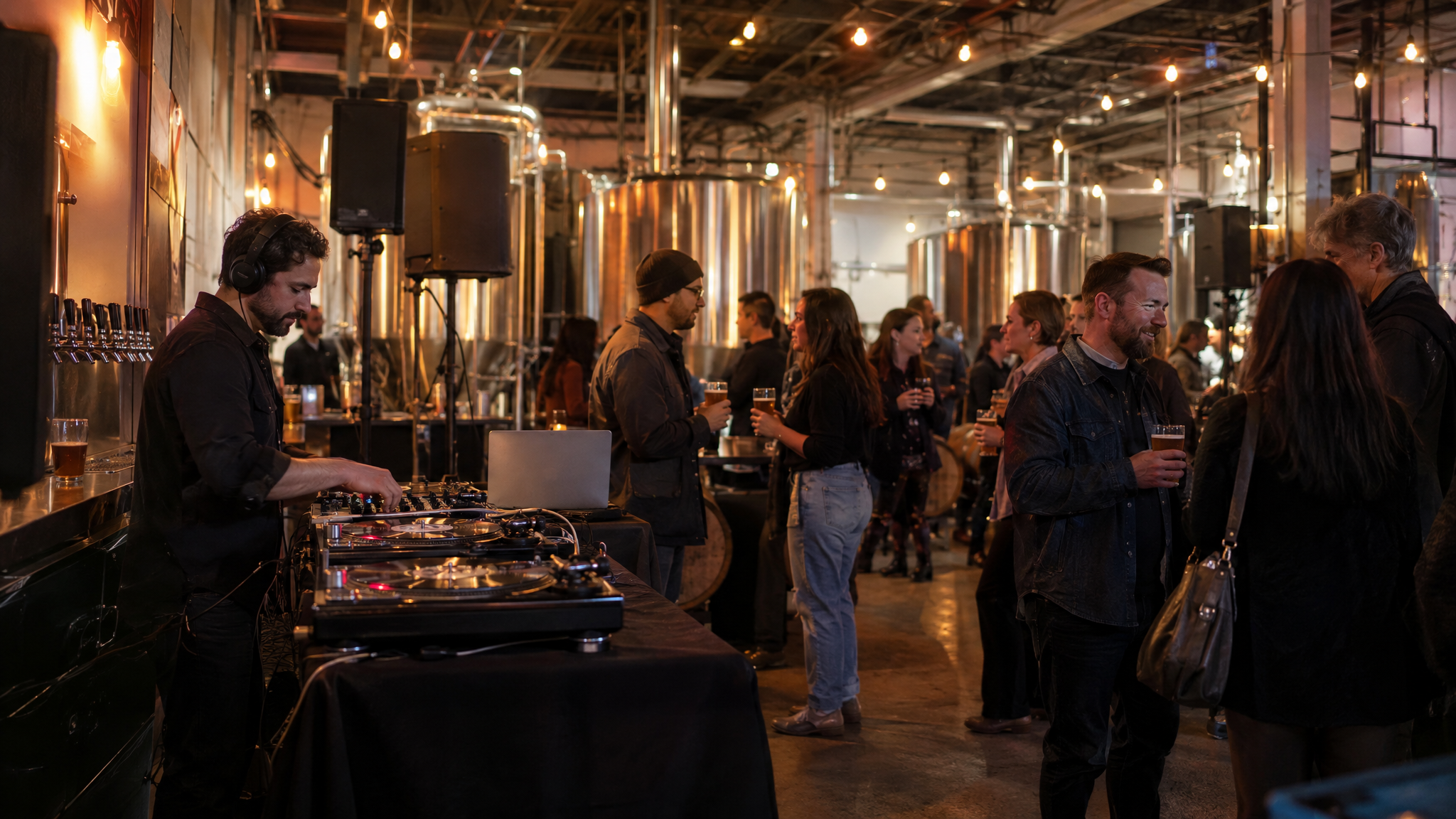
Breweries have a built-in atmosphere that no hotel ballroom can replicate. The industrial ceiling beams, the copper piping, the tap wall glowing behind the bar: your guests walk in and the space has already done half the decorating for you. In Auburn and Opelika alone, we have taprooms with capacities ranging from 40 guests in a cozy tasting room to 200 on a covered patio, which means there is a brewery footprint for almost every type of private event.
The other advantage is the casual energy. Corporate teams loosen up faster when they are holding a locally brewed IPA instead of standing in a conference center. Birthday groups feel more relaxed. Even wedding afterparties hit differently when the bar is pouring a custom collaboration brew the couple helped design. That relaxed energy pairs perfectly with a DJ who reads the room and adjusts in real time rather than running a rigid playlist.
Taproom Acoustics: Concrete, Steel, and How I Manage the Echo
Here is the reality most DJs skip over: a taproom is one of the hardest rooms to mix in. Concrete floors reflect low frequencies straight back at the speakers. Stainless steel tanks act like curved mirrors for mid-range frequencies, creating hot spots where the music sounds twice as loud and dead zones where guests can barely hear the vocals. Drop ceilings absorb some highs, but exposed steel rafters bounce them around unpredictably.
My approach starts with speaker placement. I angle my JBL PRX tops inward at roughly 25 degrees so the dispersion pattern covers the guest area without firing directly at the nearest tank wall. The subs go on 2-inch rubber isolation pads (the same kind breweries use under glycol chillers) to decouple them from the concrete slab. That single step cuts the floor-transmitted rumble by about 8 dB, which is the difference between tanks vibrating and tanks staying quiet.
I also run a short sound check at least 90 minutes before doors open. I play a reference track at target volume and walk the entire room with a dB meter, marking any hot spots on my phone. If I find a 6 dB spike near a tank cluster, I adjust the EQ on that speaker zone or reposition it a foot or two until the coverage evens out. It takes maybe 15 extra minutes, but the result is clean, even sound that fills the room without rattling a single piece of brewing equipment.
| Acoustic Challenge | Cause | My Fix |
|---|---|---|
| Bass rumble through floor | Concrete slab conducts low frequencies | Rubber isolation pads under subs, high-pass filter at 35 Hz |
| Mid-range hot spots | Curved steel tank reflections | Angle tops 25 degrees inward, reposition away from tank clusters |
| Vocal clarity loss | Competing reflections from hard surfaces | Boost 2-4 kHz presence shelf on vocal mic channel |
| High-frequency scatter | Exposed steel rafters | Aim tops slightly downward toward seated ear level |
Brewery vs. Restaurant vs. Banquet Hall: Choosing the Right Venue
Not every event belongs in a brewery. Here is an honest comparison to help you decide which venue type fits your guest count, vibe, and budget.
| Factor | Brewery / Taproom | Restaurant Private Room | Traditional Banquet Hall |
|---|---|---|---|
| Guest capacity | 40 to 200 (varies widely) | 20 to 80 (usually capped) | 100 to 500+ |
| Built-in atmosphere | Industrial, casual, photogenic | Warm, intimate, pre-decorated | Neutral, requires full decor |
| Sound restrictions | Moderate (tank vibration limits, ABC rules) | Often strict (other diners nearby) | Usually flexible (dedicated space) |
| Catering | In-house beer + food trucks or outside catering | Full kitchen included | Full kitchen or approved vendors |
| Average rental feel | Casual, relaxed, conversation-friendly | Upscale casual | Formal or semi-formal |
| DJ-friendliness | High (open floor plans, power access) | Low to moderate (tight spaces, noise limits) | High (built for events) |
If your event is 40 to 120 guests and you want a relaxed vibe with craft beer flowing, a brewery is almost always the right call. For formal seated dinners above 150, a banquet hall gives you more control. Restaurant private rooms work beautifully for intimate dinners where background music is all you need.
Tap Release Cues: Using Brewery Moments as DJ Transitions
One of my favorite tricks for brewery events is syncing DJ energy with the brewery's own schedule. A tap release, a keg tapping ceremony, or a brewer's toast creates a natural peak moment that the whole room pays attention to. Instead of fighting for attention, I lean into it.
Here is a typical timeline I have used for a 4-hour brewery buyout:
| Time | Brewery Moment | DJ Energy | Track Example | Target dB |
|---|---|---|---|---|
| 6:00 PM | Doors open, first pours | Low-key lounge, 70 dB | "Lovely Day" by Bill Withers | 70 |
| 6:45 PM | Brewer's welcome toast | Fade to silence, mic handoff | (silence for toast) | 0 |
| 7:00 PM | New tap release pour | Build track, crowd gathers at bar | "Raise Your Glass" by P!nk | 78 |
| 7:30 PM | Food truck service peak | Mid-energy grooves | "Got To Give It Up" by Marvin Gaye | 75 |
| 8:15 PM | Second tap release or trivia round | Interactive moment, mic work | "Don't Stop the Music" by Rihanna | 80 |
| 9:00 PM | Dance floor opens | Full energy | "Uptown Funk" by Bruno Mars | 85 |
| 9:45 PM | Last call announcement | Wind down, gratitude track | "Closing Time" by Semisonic | 72 |
The key is communication. I ask the brewery manager for their tap release schedule at least a week before the event, and I build my set list around those moments. When the bartender holds up the new pour and I drop "Raise Your Glass" right as the first pint hits the bar, the crowd erupts. Those are the moments people remember.
Kevin books a limited number of weddings and events each month across Auburn and the surrounding area. Reach out today and let’s talk about your day.
ABC Board Requirements for Music at Licensed Premises
Alabama Alcoholic Beverage Control (ABC) board regulations apply to any establishment holding a liquor or beer license. If you are hosting a private event at a licensed brewery, here is what you need to know about live entertainment and amplified music:
Alabama ABC licensed premises must comply with local noise ordinances during amplified entertainment events. In Auburn, the city noise ordinance (Chapter 14, Article III) sets limits at the property line, not inside the venue. I keep a dB meter running throughout every brewery event and target 85 dB max at the mix position, which typically puts us well under the limit at the property line.
Most Auburn and Opelika breweries already have entertainment permits or event use agreements in place, but always confirm with the venue manager before your event. I carry my own general liability insurance and can provide a certificate of insurance naming the brewery as additional insured, which is something many venues require for outside entertainment vendors.
The practical takeaway: as long as we keep the volume reasonable and the brewery has their permits current, there are zero legal hurdles to having a DJ at your brewery event. I handle the sound management so the brewery staff can focus on pouring great beer.
Brewing Equipment Vibration Isolation: Protecting the Product
Brewers are protective of their tanks for good reason. Active fermentation is sensitive to vibration, and a sub-woofer pounding at 40 Hz three feet from a fermenter could theoretically disrupt the yeast activity inside. I have never had a brewer report an issue after one of my events, and that is because I take vibration isolation seriously.
My setup protocol for brewery gigs includes:
-
Sub placement distance: I keep subwoofers at least 8 feet from the nearest active fermenter. If the room layout does not allow that distance, I reduce sub output by 6 dB and compensate with a second smaller sub on the opposite side of the room for even coverage.
-
Isolation pads: Every sub sits on a 2-inch Auralex SubDude or similar isolation platform. These pads absorb the mechanical coupling between the speaker cabinet and the concrete floor, which is the primary path for vibration to reach tank legs.
-
High-pass filtering: I set a high-pass filter at 35 Hz on the sub channel. Frequencies below 35 Hz are felt more than heard, and they are the ones most likely to vibrate tank walls. Cutting them costs almost nothing in perceived bass impact but eliminates the problematic rumble.
-
Post-event check: After breakdown, I walk the tank line with the head brewer to confirm zero issues. In five years of brewery events, we have never found a problem, but the check builds trust and gets me invited back.
Cross-Selling Your Brewery Event: Photo Booth and Lighting Add-Ons
A brewery already looks great, but a few targeted add-ons can elevate a private event from "fun night out" to "everyone is posting about this tomorrow." I typically recommend two upgrades for brewery events:
Photo booth: Our open-air photo booth fits perfectly against a tap wall or next to a stack of kegs. The industrial background is photogenic without needing a separate backdrop, and guests love holding their custom pours in the photos. We print 4x6 strips on-site (most brewery events go through 150 to 200 prints) and every strip includes a custom event logo or hashtag. Check out our full photo booth options on our photo booth page.
Uplighting: Four to six wireless LED uplights in amber or the brewery's brand color tucked behind the tanks transform the room after sunset. The stainless steel reflects the color beautifully, creating a warm glow that photographs incredibly well. No cables, no heat, no fire risk near grain storage. Learn more about our event rental options.
5-Step Brewery Event Booking Checklist
Ready to book your brewery event with a DJ? Here is the exact process I walk every client through:
Step 1: Walk the space together. I meet you and the brewery manager at the venue at least 4 weeks before the event. We map power outlets (I need two dedicated 20-amp circuits), measure the distance from the DJ setup area to the nearest fermenter, and identify the best speaker positions for even coverage.
Step 2: Confirm the brewery's event policies. Every brewery has different rules about outside food, decor, load-in times, and noise cutoff hours. I collect this information during the walkthrough so there are no surprises on event day.
Step 3: Get the tap release schedule. If there is a special release, a keg tapping, or a brewer's toast planned, I want it on my timeline sheet so I can build DJ transitions around those moments.
Step 4: Coordinate load-in timing. Brewery floors are slippery when wet from cleaning, and kegs are heavy. I schedule my load-in to avoid the brewery's cleaning and keg delivery windows, usually arriving 2 to 3 hours before doors.
Step 5: Confirm insurance and permits. I send my certificate of insurance naming the brewery as additional insured, and I verify that the venue's entertainment permit or event use agreement is current.
Kevin books a limited number of weddings and events each month across Auburn and the surrounding area. Reach out today and let’s talk about your day.
Need help with any of these steps? Text me at (334) 521-2835 or email [email protected] and I will handle the coordination with your brewery so you can focus on picking the beer lineup.
Frequently Asked Questions
The questions below are the ones I hear most from clients planning brewery events in Auburn and Opelika. If yours is not listed, call or text me at (334) 521-2835.
Ready to lock in your brewery event date? I book brewery gigs 4 to 8 weeks out on average, and popular taprooms fill their private event calendar fast. Reach out today at (334) 521-2835, email [email protected], or visit our corporate events page to see how DKES handles every detail from acoustics to last call.
Frequently Asked Questions
How loud can a DJ play at a brewery in Auburn?
Auburn's noise ordinance is measured at the property line, not inside the venue. I target 85 dB at the mix position, which keeps us well under the limit outside. A dB meter runs all night so we stay compliant.
Will the bass damage the brewing equipment or affect fermentation?
No. I use rubber isolation pads under every sub, keep subs at least 8 feet from active fermenters, and set a high-pass filter at 35 Hz. In five years of brewery gigs, zero equipment issues.
Can I bring outside food to a brewery event with a DJ?
Most Auburn and Opelika breweries allow food trucks or outside catering for private events. Confirm the venue's policy during the walkthrough. I coordinate load-in timing so food and DJ setup do not overlap.
How far in advance should I book a DJ for a brewery event?
I recommend booking 4 to 8 weeks out. Popular brewery dates fill quickly, especially Friday and Saturday evenings. Earlier booking gives us time to walk the space and plan the timeline together.
Do you provide a microphone for toasts and announcements at brewery events?
Yes. I bring a wireless handheld mic for toasts, brewer introductions, and any announcements. I handle the fade-out and fade-in around each speech so transitions sound seamless.
What size brewery event can you handle?
I have run sound for taproom events from 30 guests in a tasting room to 200 on a covered brewery patio. Speaker count and placement scale to the space. We walk the venue together to plan the right setup.
Can you add a photo booth to a brewery event?
Absolutely. Our open-air photo booth fits perfectly against a tap wall or keg stack. We print 4x6 strips on-site with a custom event logo. Most brewery events go through 150 to 200 prints.
About the Author
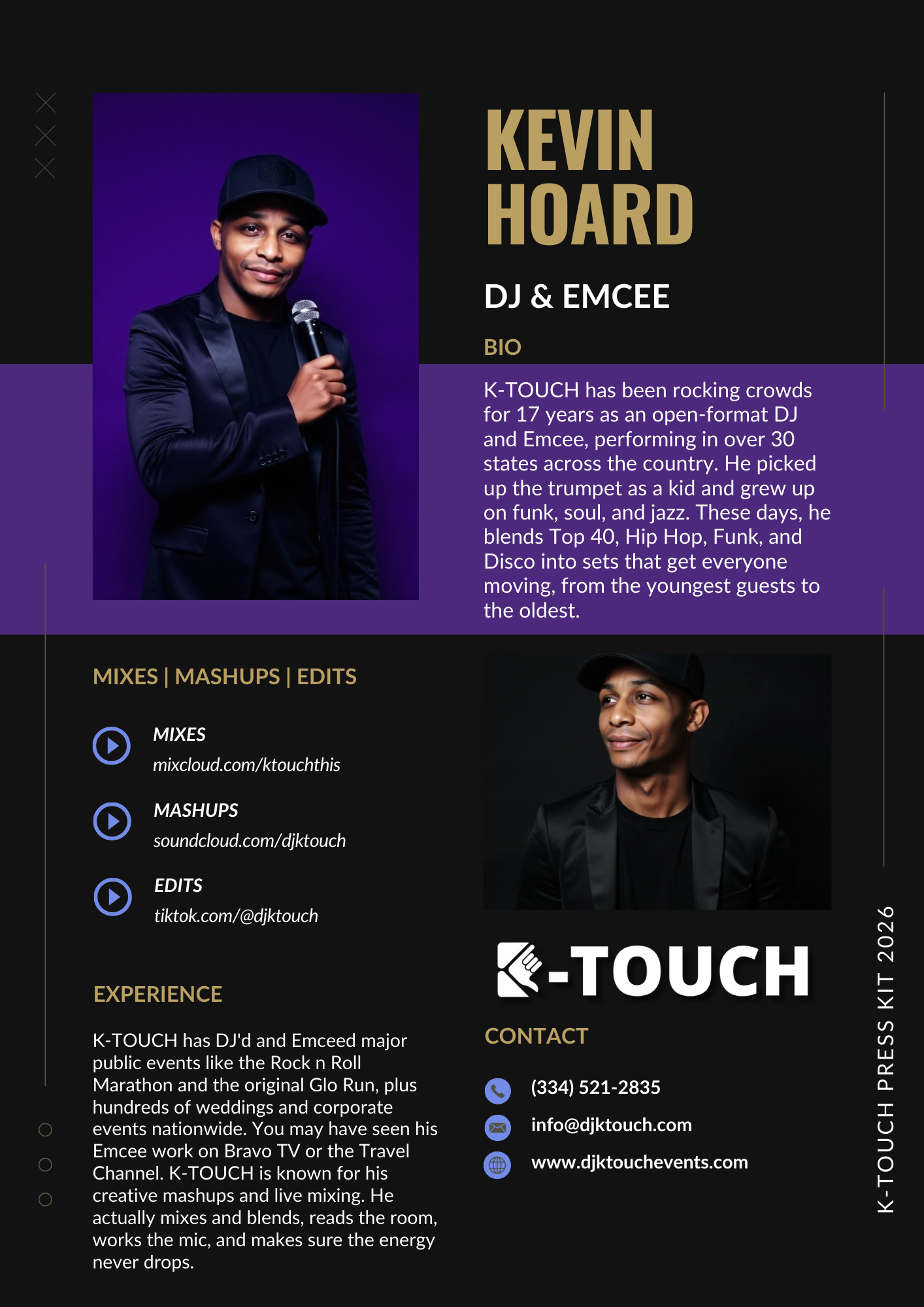
Kevin Hoard (DJ K-TOUCH)
Kevin is the lead DJ and MC behind DJ K-TOUCH Events & Services. He has been DJing Auburn area weddings since 2012 and started DKES in 2019. He has read hundreds of dance floors across Auburn, Opelika, Montgomery, and beyond, and he writes these guides to help couples plan events that actually feel like them.
Let’s Talk About Your Event
Whether it’s a wedding, a school dance, or a company party, Kevin will help you build a night your guests remember. Dates around Auburn book up fast, so reach out early.